

G’day,
The focus is typically on serving and getting to the net when we analyze Wimbledon data. After all, it is a grass court tournament! To wrap up another amazing Championships, let’s do something different this time and dive into return-of-serve averages to uncover what matters most for winning. You will also find tournament averages for the two champions, Jannick Sinner and Linda Noskova.
1/ RETURNS IN
- Men = 64% | Sinner 69%
- Women = 69% | Noskova 71%
Making two out of three returns in play is about normal for the men and women. As you look to win more return points, focus on making 70%+ of your returns. That may mean blocking or slicing more than you normally do. The problem is that if you get returns in play, and they are weak, they are going to get punished with Serve +1 forehands. If you go for too much, then you risk missing too many. It’s all about the balance and finding what works against specific opponents.
2/ RETURNS POINTS WON vs. 1ST SERVES
- Men = 26% | Sinner 27%
- Women = 34% | Noskova 34%
The focus here is defensive returns. Learn to block powerful first serves deep back into the court to take the time away from the server. The other alternative is to move far back behind the baseline (think Daniil Medvedev) so that you can let the first serve slow down to make it easier to handle.
IMPROVE YOUR RETURN GAME
Webinar 4: Return Strategy & Patterns
Webinar 17: Return +1 Strategy
Webinar 38: Aggressive Returns
Webinar 56: 2nd Serve Return Prowess
3/ RETURN POINTS WON vs 2ND SERVES
- Men = 49% | Sinner 55%
- Women = 53% | Noskova 53%
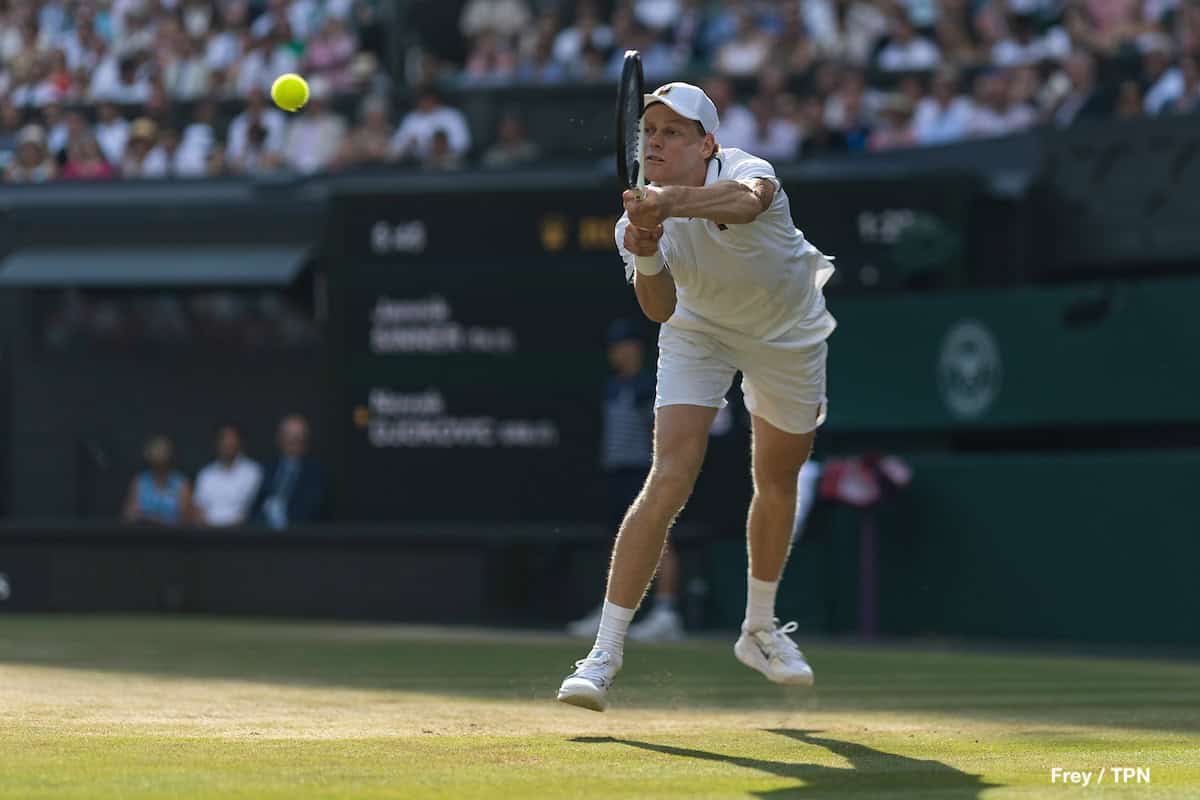
This is a stronghold of winning tennis matches. As you can see above, winning one out of three points returning first serves is what you can expect. But not here. This is a chance to tip the scales above 50% and own your opponents’ 2nd serve. By winning greater than 50% of second serve return points, you have made your opponent’s second serve a weapon of your own game. As you would expect, Sinner really dominated in this area, winning 55% of opponent’s second serve points. In the semi-final vs. Novak Djokovic, Sinner won a jaw-dropping 66% (25/38).
4/ BREAK POINTS WON
- Men = 36% |Sinner 36%
- Women = 41% | Noskova 41%
These critical one-off situations decide matches more than anything else. Once again, the chance of breaking is around two out of three for the men and slightly higher for the women. It’s not so much that you need to raise your game in these situations. It’s much more about continuing the same game plan, the same strategy that got you to break point. Stick with the patterns that you know work. This is a hard stat to really move the needle. Notice both Sinner and Noskova were right at the tournament average.
5/ RETURN GAMES WON
- Men = 17% | Sinner 20%
- Women = 29% | Noskova 28%
Winning just two return games out of 10 – or one out of five – is successful in the men’s draw, while three out of 10 is the benchmark for the women. All of the small return components such as footwork, spacing to the ball, direction of the return and mixing in power, spin and depth all manifest in this stat. You need to be able to break serve, and you need to work on achieving these averages – and then some.
6/ RETURNS IN vs 1ST SERVES
- Men = 59% | Sinner 61%
- Women = 70% | Noskova 66%
The power and force of the first serve extracts a sizeable amount of return errors. The men average failing to put four out of 10 returns back in play, while the women miss three. You can see Sinner was slightly above the tournament average, while Noskova was below the tournament average. Tough to move the needle here.
7/ RETURNS IN vs 2ND SERVES
- Men = 81% | Sinner 84%
- Women = 80% | Noskova 80%
One of the worst errors you can make in a match (besides a self-inflicted double fault) is putting a second serve return in the net. That’s a momentum killer. Yes, you are always looking to be aggressive when returning second serves, but you must have two plans in place. The first is to attack. The second is to respect a quality second serve and make sure you make it, not overplay.
8/ FOREHAND RETURNS IN vs 1ST SERVES
- Men = 70% | Sinner 70%
- Women = 76% | Noskova 75%
It’s interesting that Sinner couldn’t climb higher than the tournament average here. Typically, forehand returns are missed from quality wide serves in the Deuce court. The wide slider is tough to keep in front of the body, and players do not always adjust the size of their backswing on the forehand return, leading to errors. The women put more in play, which mainly reflects that the first serve is less potent than in the men’s game.
9/ BACKHAND RETURNS IN vs 1ST SERVES
- Men = 70% | Sinner 67%
- Women = 75% | Noskova 77%
I would not have thought Sinner would end up three percentage points below the tournament average here. His backhand return is short and simple and typically is one of the best on tour in this department. Noskova edges slightly higher than the tournament average, finding small gains all over the court to help her take the title.
10/ FOREHAND RETURNS IN vs 2ND SERVES
- Men = 78% | Sinner 84%
- Women = 78% | Noskova 74%
Sinner does an outstanding job here of climbing six percentage points higher than the tournament average with his aggressive forehand return in the court against second serves. He is not going to let this golden opportunity go by without inflicting pressure on the server. Noskova fell below the tournament average with forehand returns, but as you see below, was above it with backhand returns.
11/ BACKHAND RETURNS IN vs 2ND SERVES
- Men = 83% | Sinner 86%
- Women = 82% | Noskova 85%
Winning and losing happens right here. It’s very common on big points for the server to direct their second serve to the backhand return. If you have a strong backhand return – especially attacking against 2nd serves – then you have the ability to deliver a tough Serve +1 groundstroke for the server and instantly get ahead in the point.
12/ AVERAGE FOREHAND RETURN SPEED vs 1st SERVES
- Men = 98 km/h | Sinner 107 km/h
- Women = 99 km/h | | Noskova 102 km/h
On one hand, faster is not always better. On the other hand, we play a sport that takes time away from our opponent. Both Sinner and Noskova were above the tournament average here. In many ways, this is about taking the speed of the opponent’s first serve and using it back against them. It’s about rebounding energy rather than generating it all yourself.
13/ AVERAGE BACKHAND RETURN SPEED vs 1st SERVES
- Men = 94 km/h | Sinner 98 km/h
- Women = 97 km/h | | Noskova 98%
As you would expect, average backhand return speed is slower than average forehand speed against first serves – but not by much. It’s four km/h for the men and only two km/h for the women. Return speed is just one of the factors that go into being successful with backhand returns against first serves. Getting it deep is a prime mover in this area.
14/ AVERAGE FOREHAND RETURN SPEED vs 2ND SERVES
- Men = 116 km/h | Sinner 129 km/h
- Women = 115 km/h | Noskova 126 km/h
Wow! Both Sinner and Noskova blow the tournament average out of the water by hammering their opponent’s second serve. Sinner is 13 km/h above the average, and Noskova is 11 km/h. Both Wimbledon champions send a clear message here. You have got to attack your opponent’s 2nd serve with your forehand return. Hammer it when possible. Force as many Serve +1 errors as you can.
15/ AVERAGE BACKHAND RETURN SPEED vs 2ND SERVES
- Men = 110 km/h | Sinner 118 km/h
- Women = 111 km/h | Noskova 117 km/h
Sinner and Noskova send the same message here. Second serves are to be attacked. Sinner is eight km/h above the tournament average, and Noskova is seven. As soon as the first serve is missed, it’s instant attack mode against the second serve. Got to lean on the ball no matter if you’re returning inside the baseline or behind it.
SUMMARY
All of this wonderful Wimbledon return data provides an excellent road map for becoming a better returner. It clearly shows where Sinner and Noskova stood out from the pack, and also what averages you need to work towards as you develop your game. Lastly, get creative with these numbers and design drills to bring them to life on the practice court.